
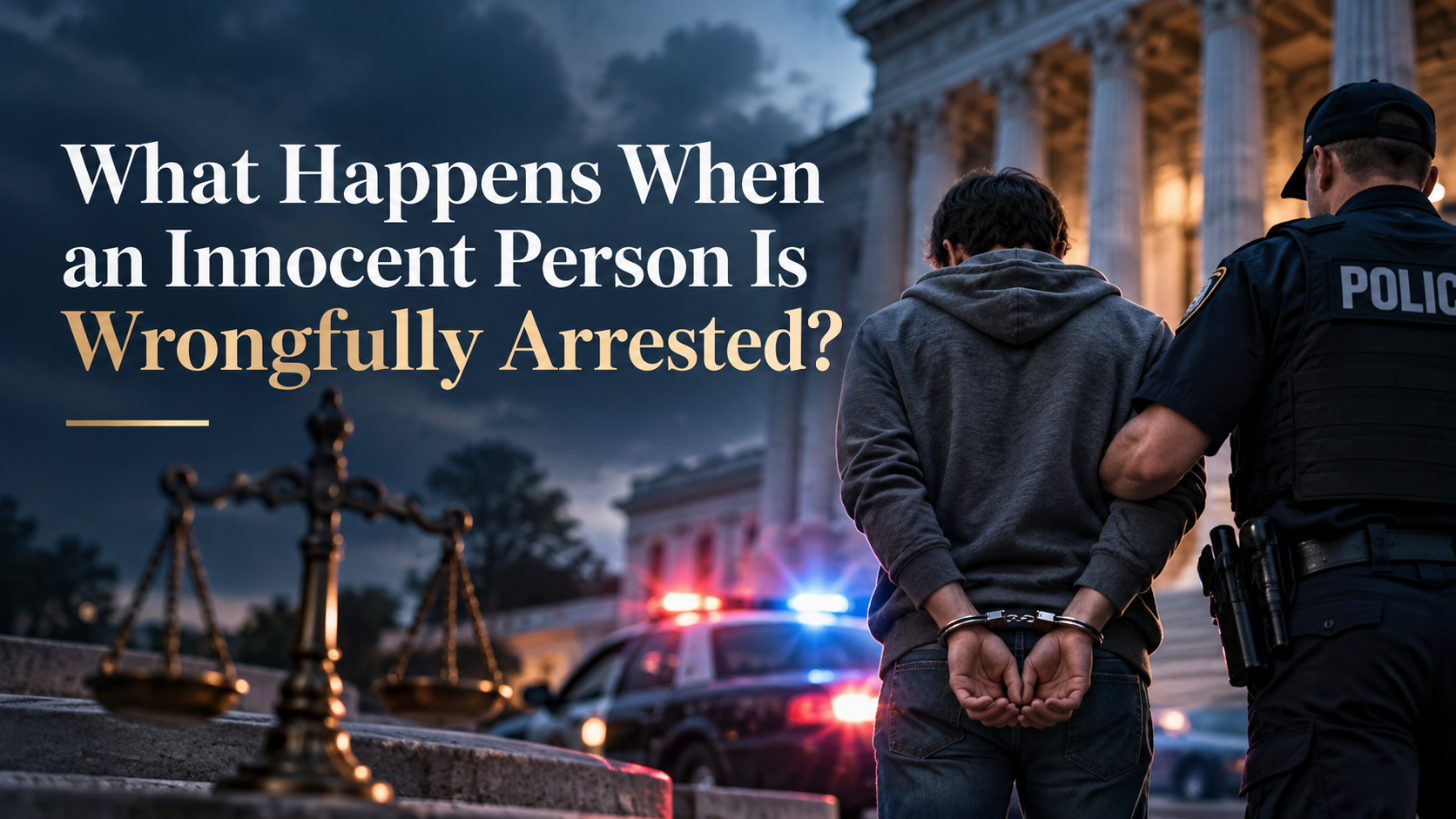
An innocent person arrested by mistake may experience questioning, restraints, transport, and confusion about why they are being detained. A person who has been wrongfully arrested may not know what information police have or when they can contact relatives. Even being charged with nothing might be a severe event.
A calm reaction may lower the immediate hazards of an encounter. The individual can enquire whether he is free to go. If he is not, he might say he wants to stay quiet and talk to a lawyer. Things may become complicated if there is a protracted argument over the facts or physical resistance. Words spoken to excuse an error may be misinterpreted or taken out of context later.
An arrest is not a judgment of guilt. It starts a process in which police, prosecutors, defense attorneys, judges, and occasionally juries may have different roles. Next steps might include booking, release, court dates, an evidence review, or a decision not to pursue charges. Sequence varies by state, county, and accusation.
Common booking information includes identifying details, fingerprints, photos, property, and the suspected offense. The booking record created in the process details the arrest, not the truth of the charge. After publication, the record may still create practical issues, so legal counsel on records and follow-up measures may be beneficial.
They may be released on bail or bond after being booked, after a hearing, or after a citation and court date. A prosecutor could choose not to bring charges, or a case may be dropped later. These results may be relevant, but they do not immediately explain how to rectify, seal, expunge, or otherwise address a record under local law.
Criminal procedure and administrative records may result after an arrest. The criminal procedure governs the course of a case. The meeting record may affect background checks, job negotiations, licensing, housing applications, and reputation. A lawyer can help you decide which issues to address first.
In the first forty-eight hours after release, a person can focus on protecting facts rather than debating the case publicly. This might include the location and time of the contact, police comments, any witnesses, injuries, items taken, and all documents obtained. Messages, call logs, photos, location history, receipts, job records, and original files may also help. Witnesses must not be forced to modify their stories.
A criminal defense lawyer may help someone with a pending charge, a court appearance requirement, or concerns about additional police involvement. The lawyer may discuss court requirements, correspondence, evidence, and requests for records. A civil rights attorney may also review the case individually if the facts show a rights violation. The right order depends on the circumstance.
Family members may provide practical help, such as keeping copies of paperwork, helping find a lawyer, arranging transportation, or caring for children. They must not contact alleged victims, witnesses, cops, or prosecutors to try the case. Even well-meaning touch might be seen as pressure, interference, or an effort to alter evidence.
You may be legally innocent and nevertheless be immediately disrupted at the point of arrest. Stress may arise within hours from missed work, lost phones, transportation costs, child care demands, and unexplained absences. A charge may also create employment difficulties for those in licensed professions, jobs that require background checks, or roles involving public trust. This depends on workplace norms and legal counsel.
Rumors, photos, and online booking information may spread quickly, while dismissals and corrections may get less attention. Someone may feel the need to explain what happened publicly. A lawyer can separate what’s necessary for legal review from a public statement that might complicate a pending lawsuit.
There might also be emotional impacts of arrest such as shock, rage, humiliation, sleep issues, trouble focusing, or ongoing feelings of danger. These responses do not mean that you have a medical ailment, and individuals react differently. Mental health support may help if symptoms continue or affect daily life.
While the phrase “innocent person detained and unfairly arrested” expresses a concern of human importance, the legal test turns on the facts and the law. One may think the arrest was wrong, yet still must prove that the facts known at the time did not justify holding him. Relevant information may include identification records, video, phone data, witness statements, dispatch audio, case papers, or evidence that a warrant was invalid or did not pertain to the subject.
A dismissal does not necessarily bar all prospective legal claims. A case might end for lack of evidence, witness problems, diversion, process issues, or legal decisions. The legality of an arrest may require a separate assessment of what authorities knew and properly relied on at the time. Practical chores include record keeping, meeting court requirements, and obtaining skilled guidance.
Plain language may help families and communities discuss an arrest in ways that do not cause more harm. It might be unjust to use an accusation as evidence. “Also, making unsupported claims of misconduct can blur the facts.” A better approach is to state what is known, clarify what is not, and have legal counsel assess the evidence.
A wrongful arrest story may highlight the uncertainty, loss of control, administrative complexity, and emotional damage that legal standards may not reveal. It is not a substitute for evidence in a legal situation, but it may motivate readers to learn about due process, documentation, monitoring, and fair dealing by public institutions. Bad Cops Who Arrested a Good One is related nonfiction reading available on Amazon. This article does not summarise or rely on the book’s narrative. Anyone facing a real arrest should get proper legal guidance rather than adapt another person’s experience to their own circumstances.