
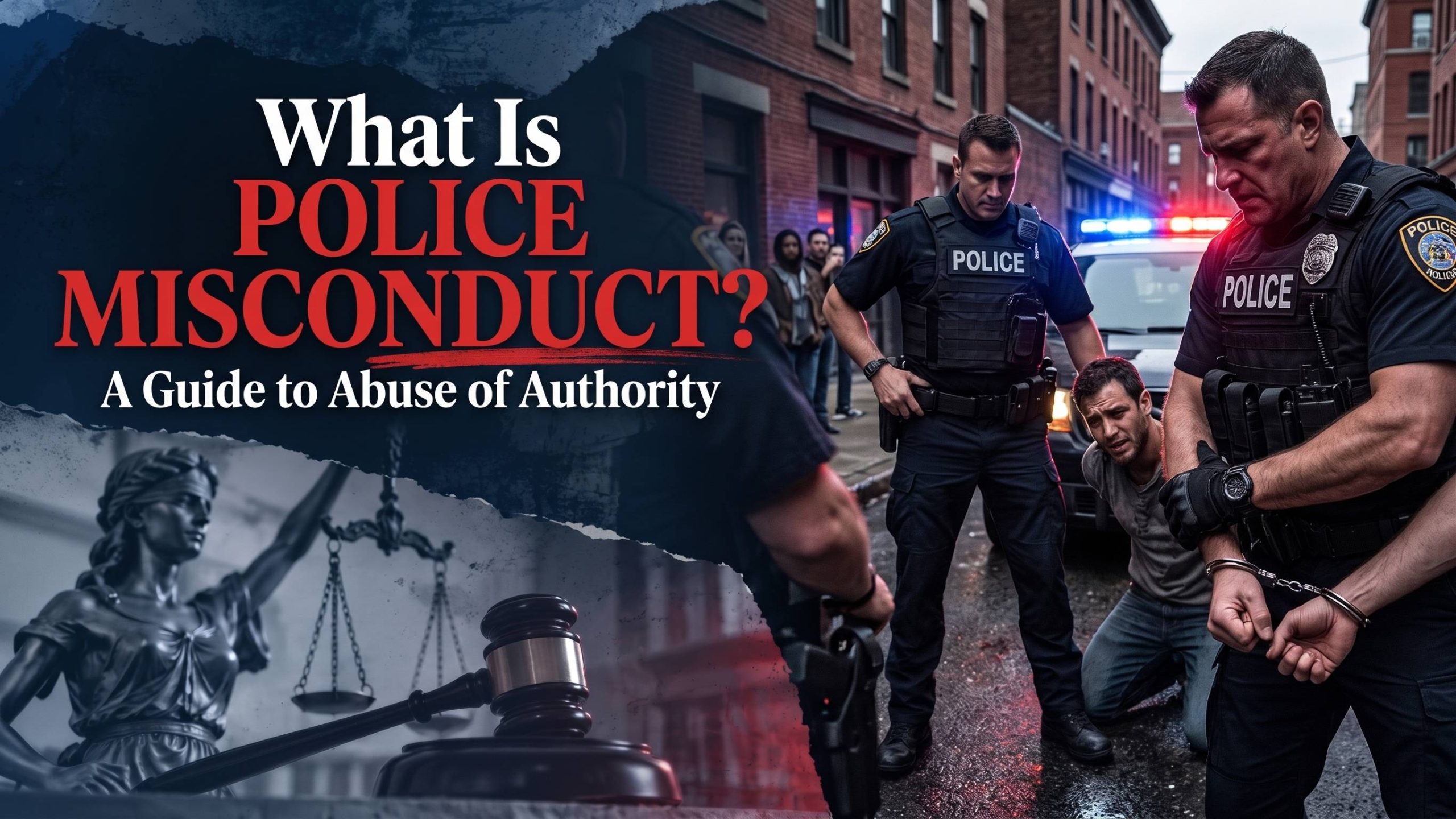
An old storyteller’s honest account of badges, power, and the people who pay the price
Sit down and make a cup of tea. The cop who pulled a stranger’s kid out of a burning home and the police who put his knee to a man’s neck until he stopped breathing are two sides of the same coin, and I want you to hear about it from someone who has seen it all: me.
They were both dressed similarly. That is the most challenging and first lesson. There are no monsters in the tale of police brutality. This narrative is about what happens when no one is watching regular people use enormous power.
When a plumber called George Holliday captured police officers assaulting a driver named Rodney King on his balcony in Los Angeles in March 1991, I was a young guy. Holliday had a new video camera. When I was a kid, I recall all the neighbors gathered around one TV. Before it, the majority of us had only heard rumor mill speculation: about the harrowing ordeal in the van’s rear, about the suspect who “fell down the stairs,” and about the confession that was signed at three in the morning. Seeing it is different from hearing it. The discussion shifted because of that shaky recording. A year later, when the cops were found not guilty by a jury, Los Angeles was rocked for days.
After 35 years, every police officer now wears a camera on their chest or in their pocket. Despite this, the stories keep coming. Let me clarify, to the best of my ability, the nature of police misconduct, why it happens, and the steps you can take to put an end to it.
When a police officer uses their position to commit a crime, violate someone’s civil or human rights, or disobey departmental policy, that is police misconduct. The term used by American solicitors to describe this kind of behavior is “under color of law.” Put simply, the cop abused the trust people placed in him by abusing the authority they granted him.
It all revolves around police brutality and their misuse of power. Assault occurs when a citizen strikes another person. The individual was unable to defend himself and had no one to turn to for help except the officer’s coworkers, making an officer’s punching of a man in handcuffs both an assault and a breach of public trust.
For that reason, police brutality is taken far more seriously than other forms of misbehavior. In many cases, the officer is the only one who has the last say, as well as the keys, weapon, and report.
Over the years, I have learned that misconduct wears many coats. These are the ones I have seen most often:
Notice that several of these involve no violence at all. A false report can ruin a life as surely as a baton.
Officer Derek Chauvin knelt on George Floyd’s neck for almost nine minutes on May 25, 2020, in Minneapolis, even though Floyd said he was unable to breathe. It was recorded on the phone of a young woman called Darnella Frazier. April 2021 saw Chauvin’s conviction for murder and manslaughter.
Many youths overlook this section. U.S. Justice Department investigators began their broader “pattern or practice” probe of the entire Minneapolis Police Department the day after that decision. According to the Associated Press, federal investigators held departmental structural flaws responsible for Floyd’s death as the cause of his death when the results were released in June 2023. The report detailed numerous incidents of police brutality, including: responding harmfully to individuals experiencing mental health crises; discriminating against Black and Native American residents; using force to punish individuals who angered or criticized them; retaliating against protesters and journalists; and using dangerous force on people accused of minor or no offenses at all.
Similar findings of racial discrimination dating back over ten years were made public by Minnesota’s Department of Human Rights in 2022.
My takeaway is straightforward. What happened when Chauvin hurt his knee was only the beginning. It sealed the deal after years of tolerating, excusing, and writing off related behavior. In the fertile soil of minor permits, misbehavior flourishes.
Tire Nichols, 29, was pulled over by Memphis police on January 7, 2023, on suspicion of careless driving. The Associated Press reports that they subdued him with pepper spray and a Taser after removing him from his vehicle. On the run, he fled. Near his family’s house, he was apprehended by police officers who, as he cried out for his mother, punched, kicked, and hit him with a baton. After three days, he passed away.
The video that continues to trouble me the most is the one shot taken from a police pole camera that showed the police officers chatting and joking as Nichols lay bleeding to death. They later omitted details of their punches and kicks from their reports.
Weeks later, the city dissolved the Scorpion Unit, a crime-suppression force that the cops belonged to. Three of them were found guilty by a federal jury of obstruction in October 2024, while one, Demetrius Haley, was found guilty of civil rights violation resulting in physical harm to Nichols. Two other individuals, Emmitt Martin and Desmond Mills Jr., pleaded guilty and testified. The police agreed that no one would snitch on another, Martin told the jurors, according to CNN. “I made his child fatherless,” Mills sobbed as she told the court, as reported by NBC News. Thirdly, a state jury in Tennessee found the three surviving cops not guilty on all state counts, including second-degree murder, in May 2025.
This situation teaches us two things. First, special units designed for aggressive aims and rapid outcomes risk becoming preoccupied with the general population. Additionally, Nichols and the cops were all Black. Racism is only one aspect of misconduct. The culture of authority inside a unit and the protective quiet around it are the central themes.
Police officers’ abuse of power does not always occur in the field. For some, it happens after the prison door shuts, even if they haven’t yet served their sentences.
Theft of a rucksack was the basis for the 2010 Bronx arrest of sixteen-year-old Kalief Browder. Because his family could not pay bail, he was transferred to Rikers Island, the largest prison complex in New York City. His trial was repeatedly postponed as he awaited it. He waited for over three years. About half of that time was spent in isolation. Guards and other prisoners abused him, and his attorney said he went weeks without food, mice in his cell, and a shower. Multiple suicide attempts occurred inside. The accusations were simply dismissed in 2013.
Even when Browder returned home, the jail accompanied him. He committed suicide in his family’s house on June 6, 2015, when he was 22 years old. After Jennifer Gonnerman published his narrative in The New Yorker and it received extensive media coverage, particularly from the Los Angeles Times, it led to the abolition of juvenile solitary confinement in New York City and, in 2016, to a federal prohibition on the practice by President Obama in federal prisons.
Misconduct is more than just physical violence; it may take many forms, and I share my tale with every young person who would listen. Systemic failure to remember the presumption of innocence can gradually and subtly erode a person’s mental faculties.
I have known many police officers. Most of them were decent men and women doing a dangerous job for modest pay. A few were bullies who should never have been hired. But the frightening truth is that misconduct often comes from the middle: officers who weren’t cruel when they joined, but slowly bent to the culture around them.
Here is what I have seen push them there:
None of this is an excuse. A badge is a promise, and these are explanations for why the promise breaks, not permission to break it.
And let me give you the good side too, because an honest elder tells both. Officers have testified against their own. Cities have banned chokeholds and neck restraints; Minneapolis itself now prohibits them. Body cameras have exposed lies and cleared honest officers of false accusations. Change is slow, but it is real when people keep pushing.
This is general guidance, not legal advice, and the details vary by country and state:
When I was your age, I believed that the law protected everyone equally because a teacher told me so. Life taught me that the law protects best those who know their rights, keep their records, and refuse to stay silent.
Respect good officers. They exist, and they need your trust to do their work. But never confuse the uniform with the person inside it. Power does not make anyone right. Accountability does.
Police brutality refers specifically to excessive or unnecessary physical force. Police misconduct is the broader term that also covers false arrests, coerced confessions, discrimination, corruption, cover-ups, and neglect of people in custody.
No. Officers may legally use reasonable force to make arrests or protect lives. It becomes misconduct when the force is excessive for the situation, used as punishment, or continues after the person is restrained or no longer a threat.
It means an officer uses job powers, such as arrest, search, detention, or force, for purposes the law does not allow: to punish, intimidate, discriminate, or protect themselves or colleagues.
In the United States, several federal appeals courts have recognized a right to record police. At the same time, they perform their duties in public. However, some states set rules about distance and interference. In the UK, filming police in public places is generally lawful. Always keep a safe distance and never obstruct an officer.
Juries tend to trust officers, the law gives police broad discretion to use force, and colleagues may stay silent. In U.S. civil cases, a doctrine called qualified immunity can also shield officers unless the violated right was “clearly established” by earlier court rulings.
File a complaint with the department’s internal affairs office or your local civilian oversight body, keep copies of everything, and consult a civil rights lawyer. For serious cases in the U.S., the Justice Department’s Civil Rights Division accepts reports; in England and Wales, the IOPC oversees serious complaints.