
Nobody warns you about the quiet part. Not the loud catastrophe itself, the arrest, the accusation, the phone call that changes everything. The quiet part comes after, when the noise dies down and you are sitting alone with what is left of your life, trying to figure out if you still believe in anything.
I have been there. Not in a motivational-poster kind of way. In a real, concrete, my-career-is-gone, my-family-is-hurting, the-system-just-chewed-me-up-and-lied-about-it kind of way. And what I learned during that stretch of my life is that faith is not something you feel when things are going well. Faith is the thing you reach for precisely when it has no logical reason to be there.
That is what nobody tells you. Most people picture faith as a warm, comfortable thing. A Sunday morning feeling. But the faith that actually holds you together when the ground gives out looks nothing like that. It is stubborn more than it is peaceful. It is a decision you make at two in the morning when every piece of evidence says give up.
I spent years working inside some of the hardest environments this country produces. Folsom Prison is not a place that lets you hold onto comfortable illusions. You see what people are capable of at their worst, and you also see, sometimes when you least expect it, what they are capable of when someone finally believes in them. That second thing is what kept me going as a corrections officer and later as a coach and teacher. The belief that people are not finished. That a situation, no matter how bad, is not the final word.
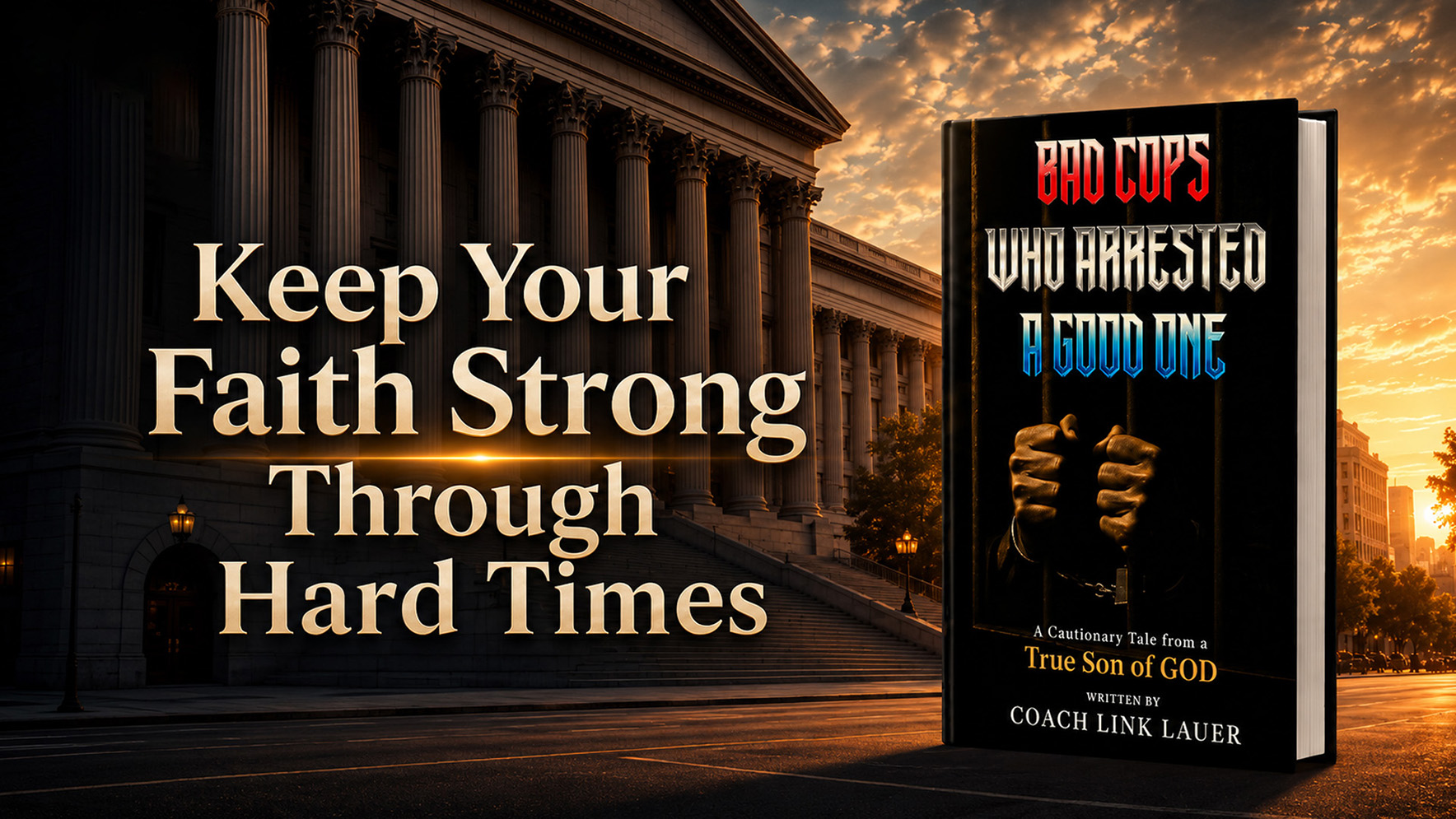
When I was falsely arrested in Oklahoma for trying to protect children from a dangerous situation, I had to borrow that same belief and point it at myself. Because the system I had served and trusted turned its back on me. Evidence was buried. Warnings I had given were ignored. And a young man later died of an overdose in the same house I had been trying to get authorities to address. I carried that weight for a long time.
But here is what I know from the other side of it: faith is not passive. It does not ask you to sit still and wait for things to fix themselves. Real faith demands action. It says, you are not done, now get up and prove it. I got up. I fought the case. I went through every court proceeding, every confrontation, every moment where it would have been easier to accept a quiet defeat. And I won a federal civil rights settlement that most people said was impossible.
I am not telling you that to brag. I am telling you because I want you to understand what faith actually produces when you refuse to let go of it. It produces endurance. And endurance eventually produces a result that silence and surrender never could.
The young people I have coached over the years often come in already beaten down by the time they reach me. Their families have failed them, or their neighborhoods have, or they have simply been told too many times that they are not worth the effort. One of the first things I try to give them is not a skill or a strategy. It is the experience of being believed in. Because once you know what that feels like, even once, you start to build it inside yourself. And that internal belief is the seed of faith that no outside circumstance can fully kill.
Hard times are not a sign that you chose wrong or that your life is broken beyond repair. Sometimes hard times are the only school that teaches what you actually need to know. I would not trade what I went through, not because it was not painful, because it was. But because I came out of it knowing exactly who I am, what I stand for, and how much it costs to stand there.
Hold on to that. When the case looks impossible, when the people you trusted let you down, when the quiet sets in and doubt gets loud, do not negotiate with it. Faith is not the absence of doubt. It is what you choose over doubt when everything else has been taken away.
That choice is always yours. Nobody can arrest it.